I USED TO AVOID COLLABORATION

I remember, before I began writing Manifestos, interdisciplinary work was, for me, exhausting. Irritating. Deceptive.

My collaborators and me, we would spend hours trying to understand each other’s priorities, and even more hours realizing- too late- that we didn’t mean the same thing when we said for example “let’s have a rehearsal session,” or “we should test the material,” or also even more simple things, like « we start on time ».

We used the same words, but they didn’t mean the same things for each of us.

We thought we spoke the same language, but we didn’t.

UNTIL I WROTE MANIFESTO

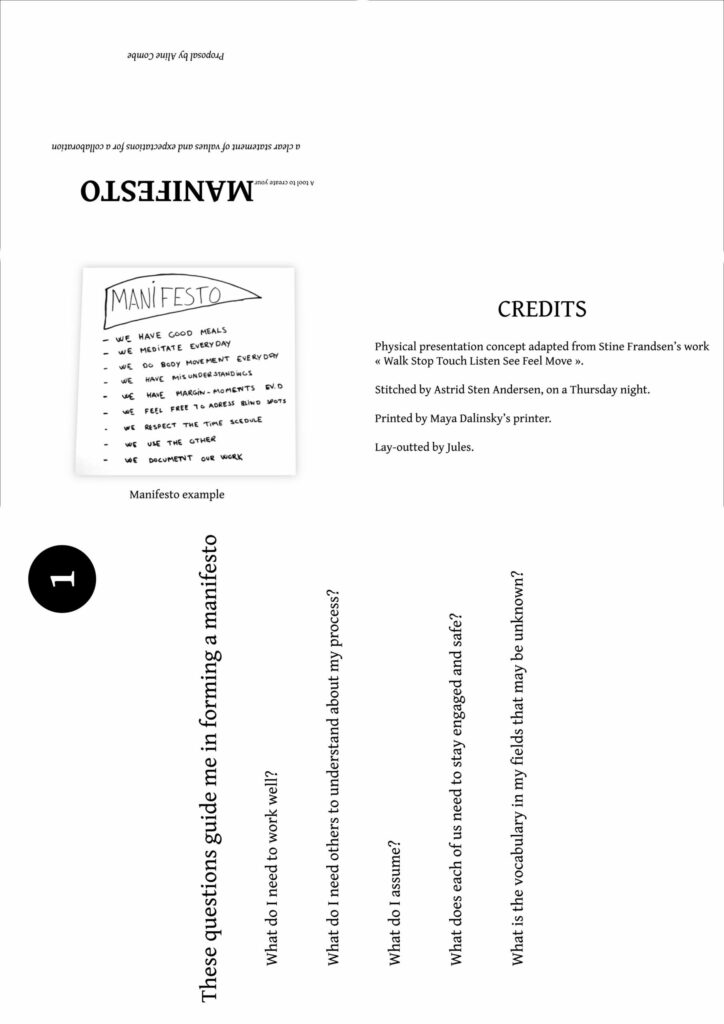
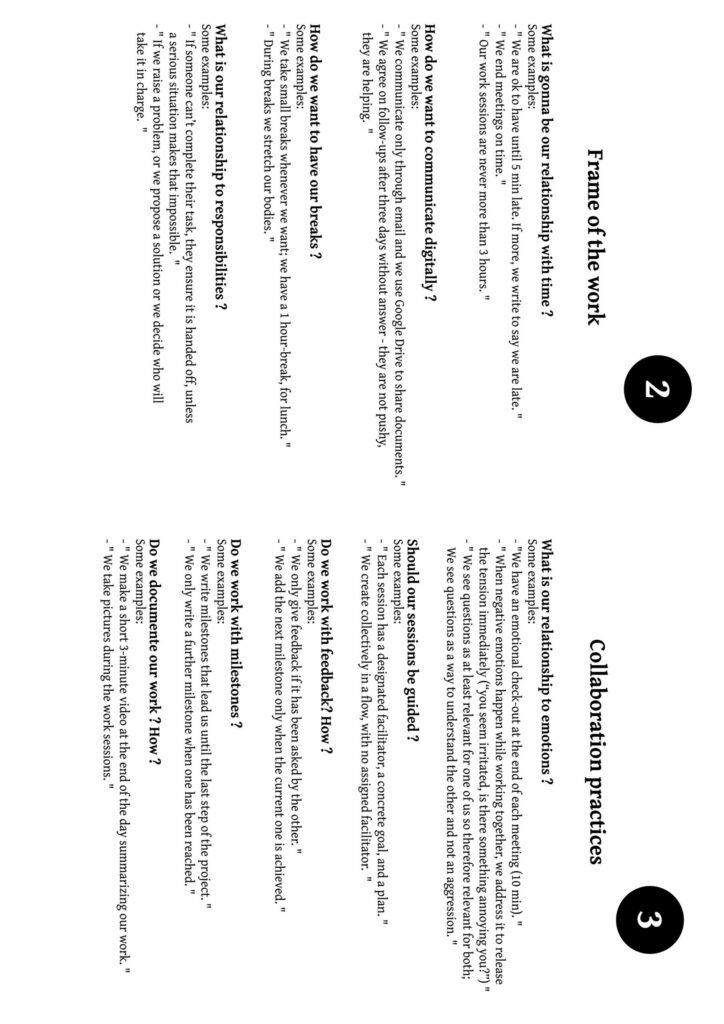
To avoid this, at the beginning of each interdisciplinary collaboration, I ask that we write together a document that I call « a Manifesto ».
A Manifesto is like a user manual for the collaboration. I call it a « Manifesto » because I see it as a political act: taking the time to reach each other’s perspective, even when the usual production rush would push us straight into the work.

It is a moment to clarify what each person NEEDS to feel understood and comfortable in the process, and to make VISIBLE how we each function and work best.

To give a metaphor to it: In dance, we learn that in order to jump high, the most important thing to work on is not the jump itself, but what happens just before, the preparation to the jump, which is: the plié. The plié must be deep and generous to allow a high jump.
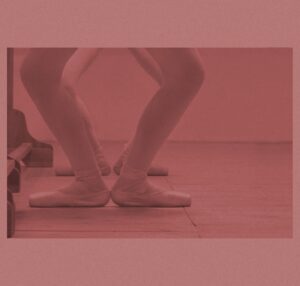
The Manifesto is our plié: a grounding moment before we dive into creation.

The point is to name what each of us needs in order to stay engaged and safe in the process.

And we don’t only name our needs; we NEGOTIATE. We negotiate, so there can be room for all of them. And the key here, is not only to negotiate, but to negotiate CONCRETELY.

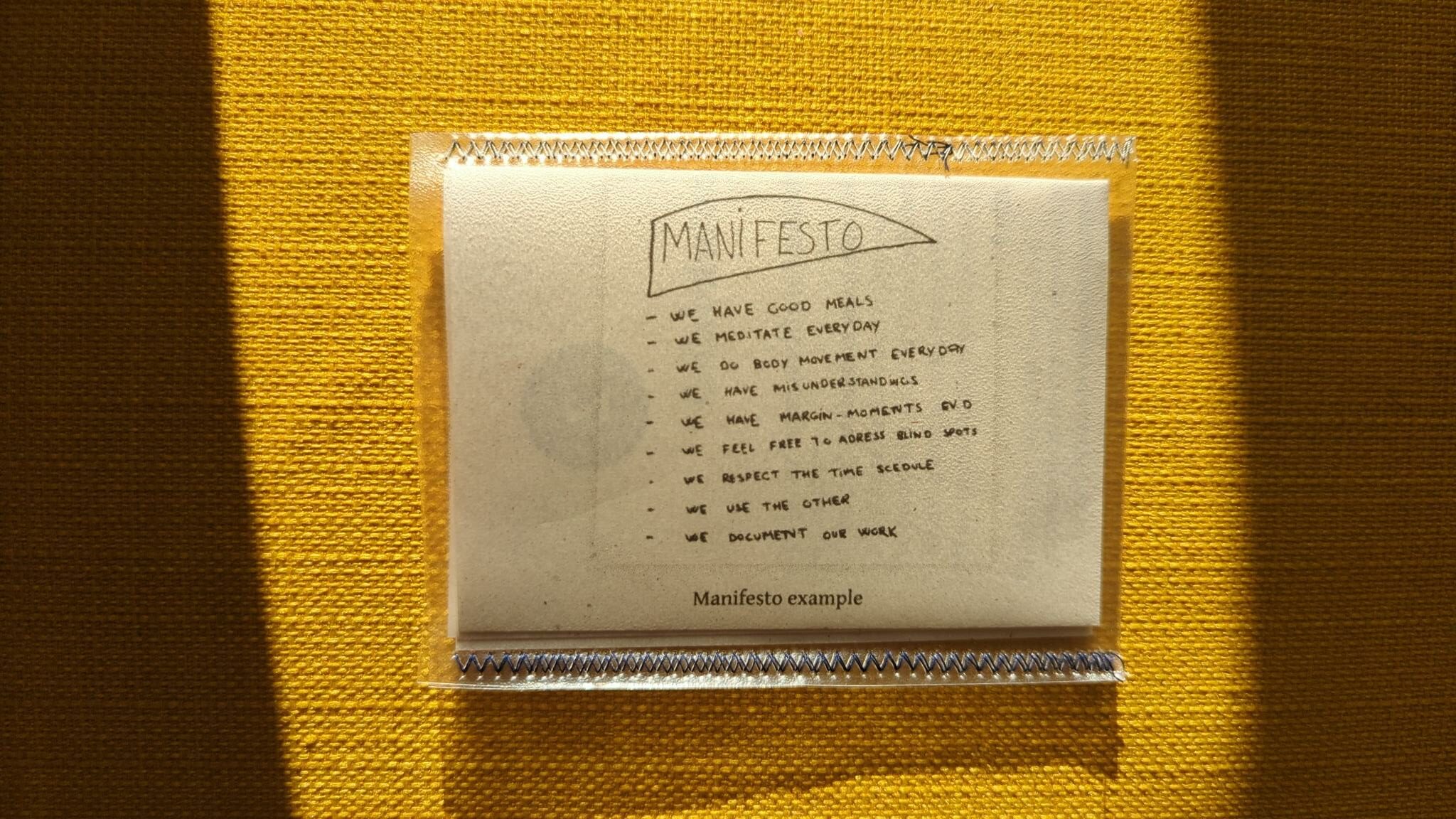
In the Manifesto, we don’t just write “we start on time,” because that can mean very different things to different people, « starting on time »… For some, it means everything is ready: bodies warmed up, instruments tuned, computers on. For others, it just means pushing the door of the work-place on time…So we write: “we start on time, meaning that …blablabla…” and we spell out together what we have agreed on.

If you ever make a Manifesto yourself, my advice for this moment : be FEARLESS with the questions you ask. Dont be afraid of looking stupid or annoying. This is exactly the moment to do it. And trust me, I know it is hard…
SHORT EXAMPLE

Imagine a choreographer and a computer scientist, working on a duet between a human and a computer system. They sit at a wooden table, taking notes for their

Manifesto. The room smells of fresh coffee, we hear the soft sound of typing as they take notes for their Manifesto.

Let’s listen to what they say:

Computer scientist
“I suggest we begin each afternoon by recording, with my software, the choreography you created in the morning.”

Choreographer
“mmmmmm… Actually that will not work for me… After a long break, like lunch, I need to warm-up my body again, to be able to dance. I propose that we start with 20 minutes of warm-up instead.”

Computer scientist
“Ah, okay! No problem. Should I arrive after those 20 minutes then?”

Choreographer
“Mmmmm… I prefer if you are already there. My choreography plays with your presence on stage, so warming up with you in the room really helps me.”

Computer scientist
“Ah ok, you need me in the room… Alright. Yes, I will do that. Euhm, but, where should I be in the room while you warm up?”

Choreographer
“Anywhere, as long as you are in the room.”

Computer scientist
“Okay, so in our Manifesto we write:
‘Each afternoon session begins with a 20-minute warm-up for the choreographer, with the computer scientist present in the room, doing whatever she needs to do.’”

——— (end of the dialogue) ———

Thanks to la sonothèque for the background sound. 


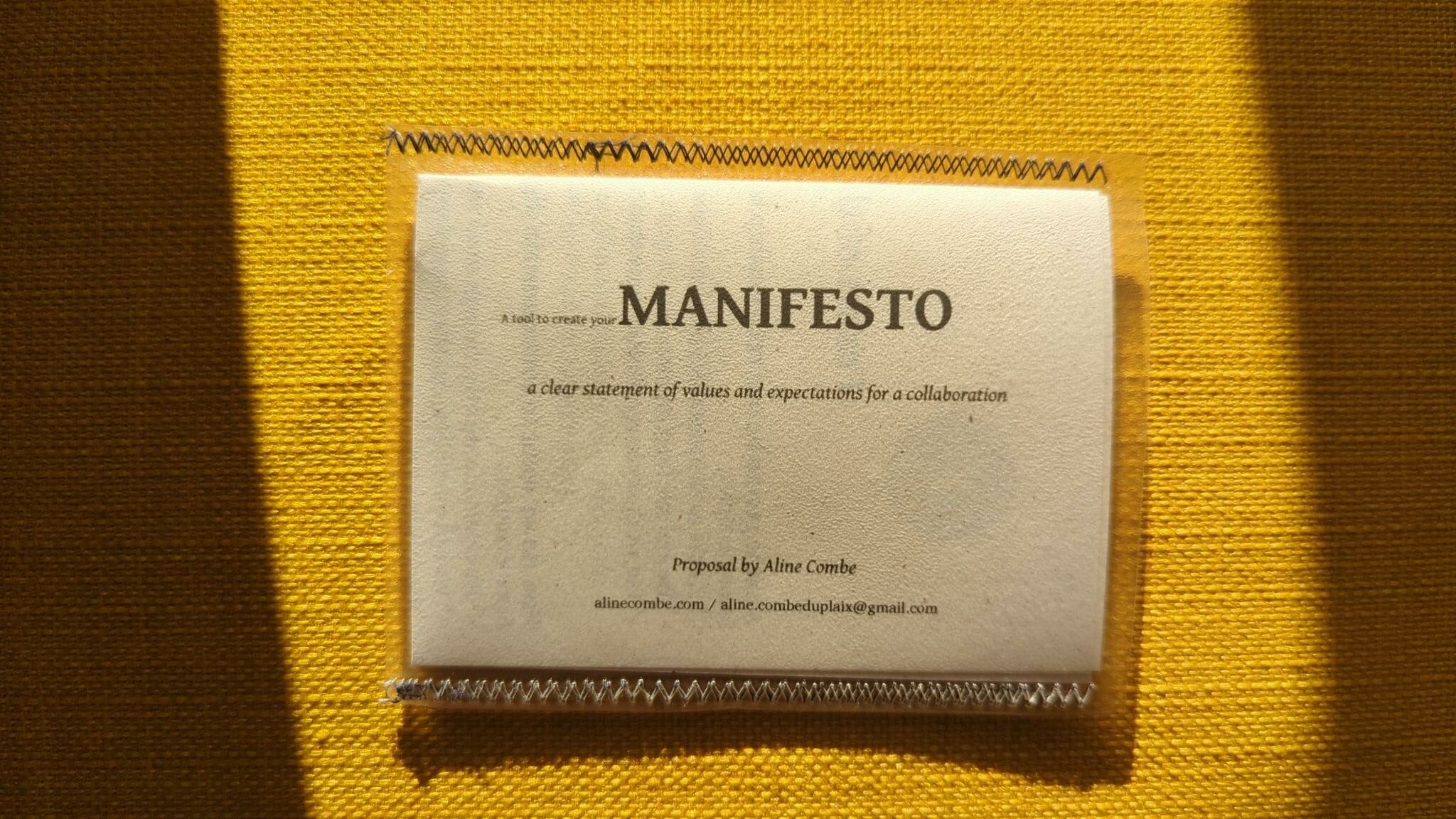
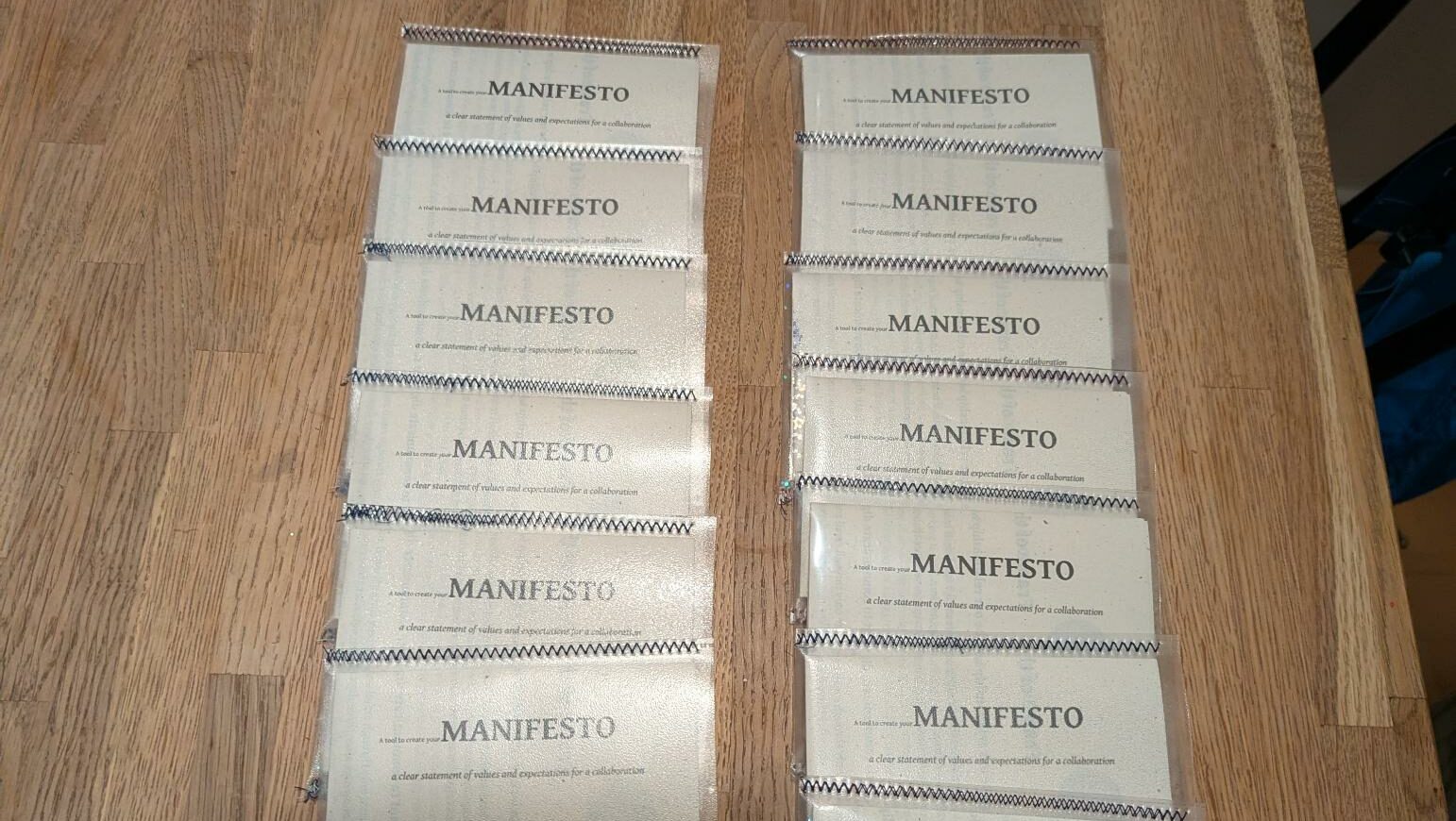
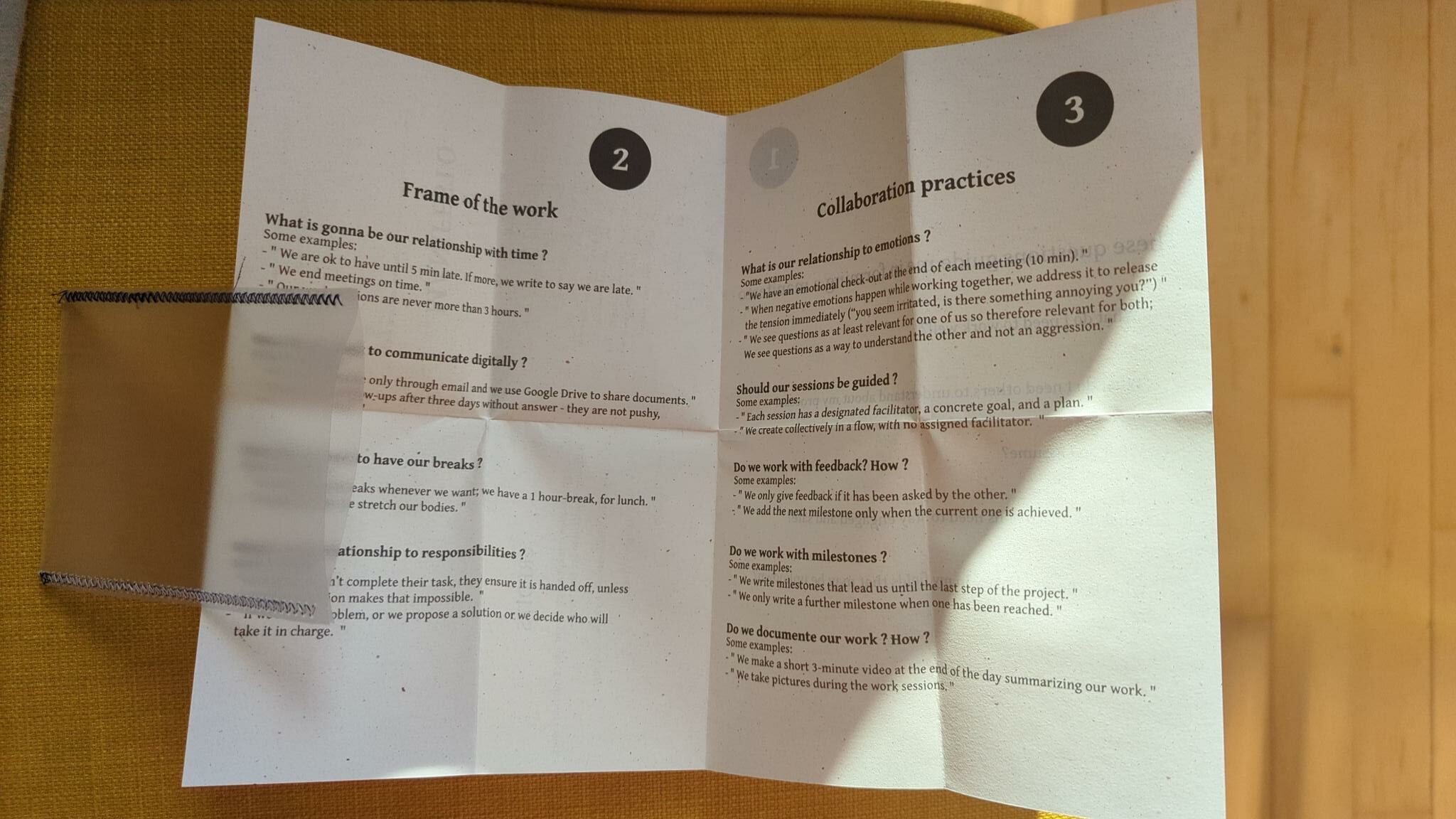
I don’t think that writing Manifestos is the only way to care about collaborative processes. But, if you want to try the Manifesto-method, I made a little tool that you can take with you, that you can use to create your own Manifestos.